
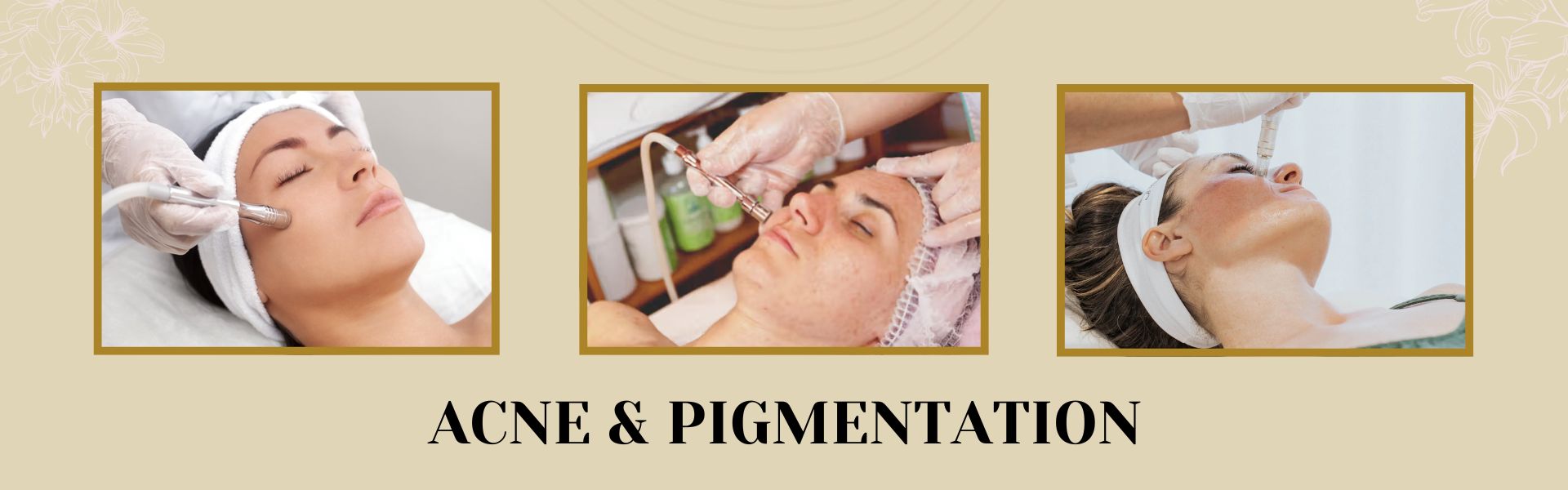
Acne Treatment in Mumbai
Treatments Available
- Comedone extraction
- Microdermabrasion
- Laser for Acne
- Chemical Peels
- Derma Rollers
- Filler for acne scars
Send Us Quick Enquiry
Pigmentation Treatment in Mumbai
Treatments Available
- Microdermabrasion
- Skin Peels
- Mesotherapy
- Laser (Q Switch & IPL)
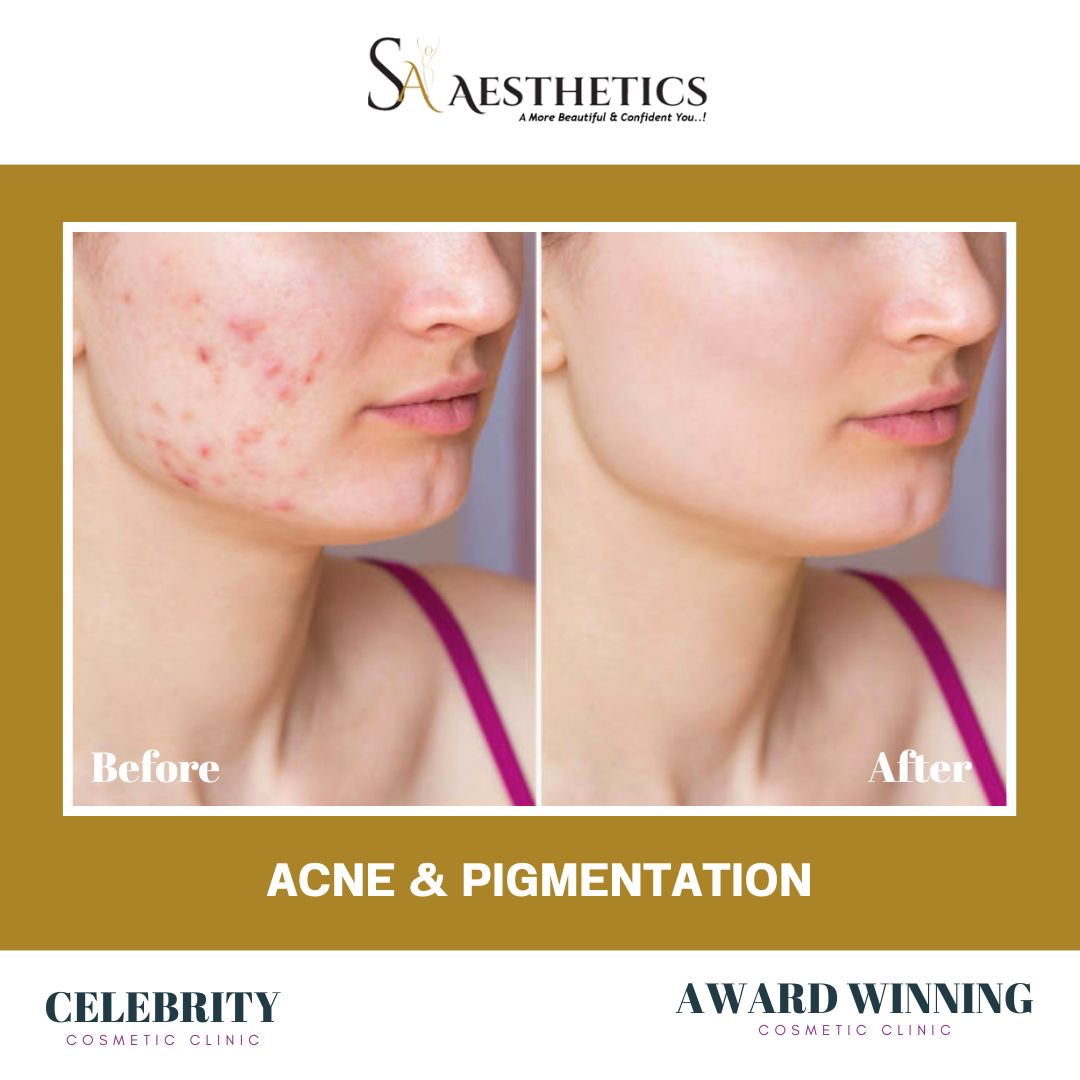
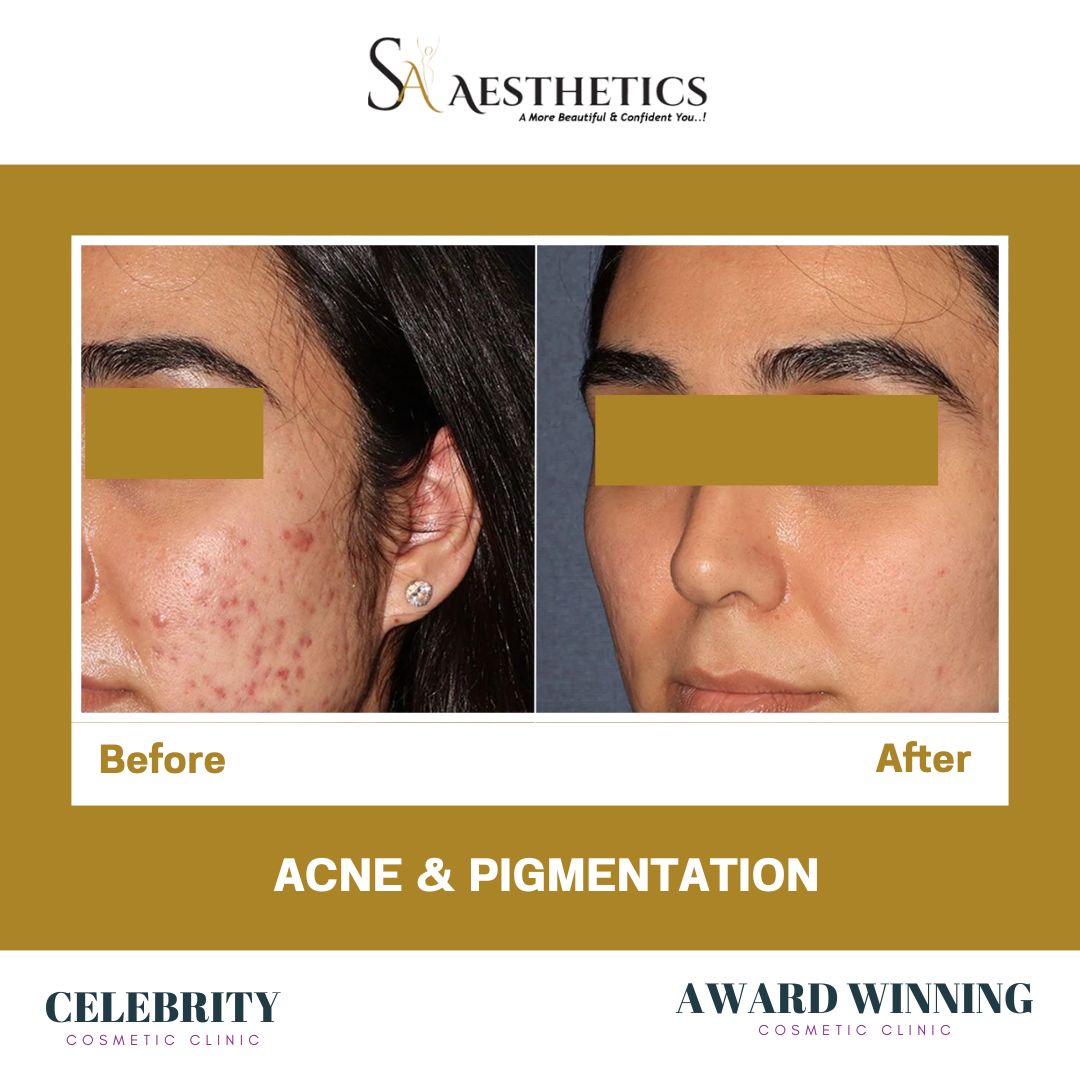
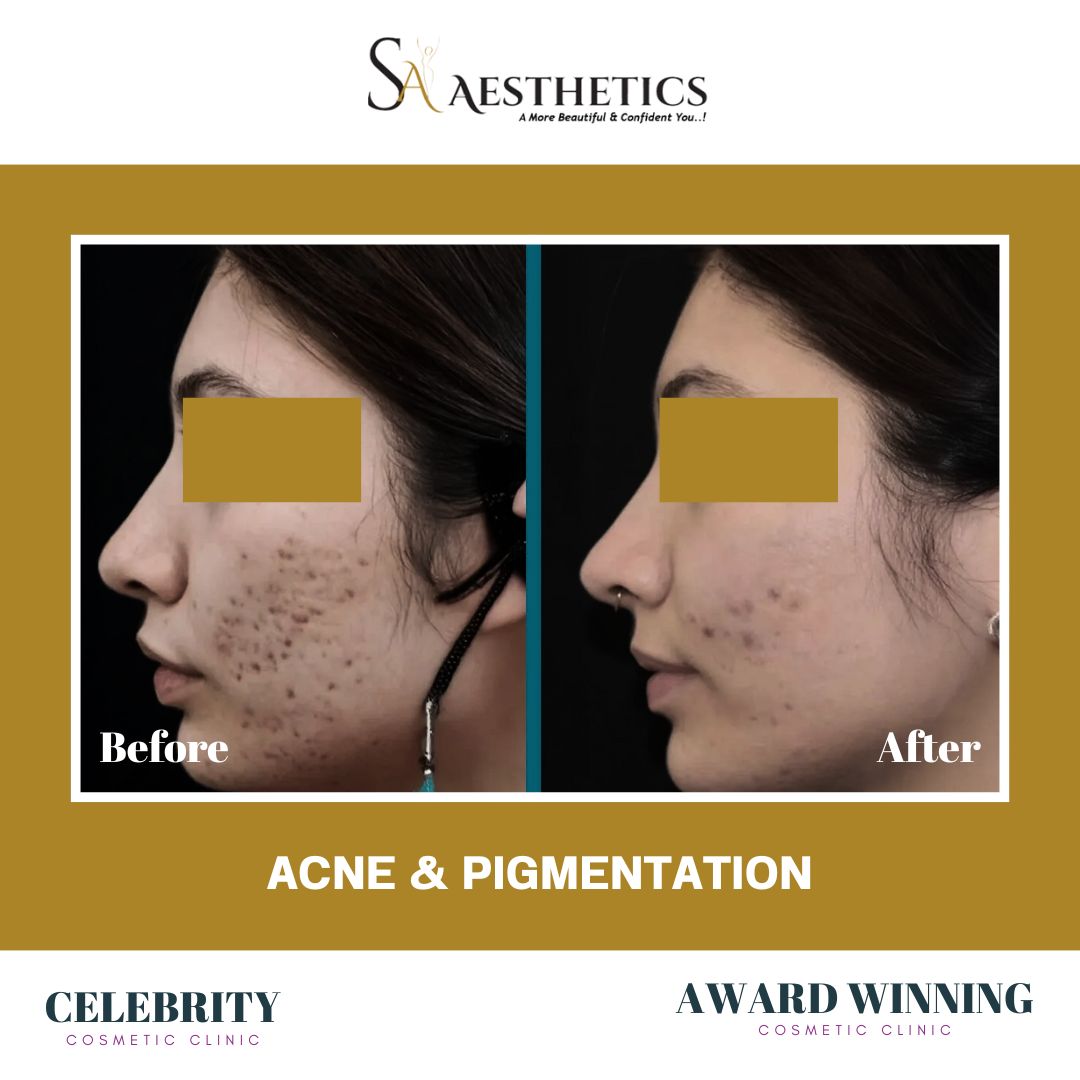
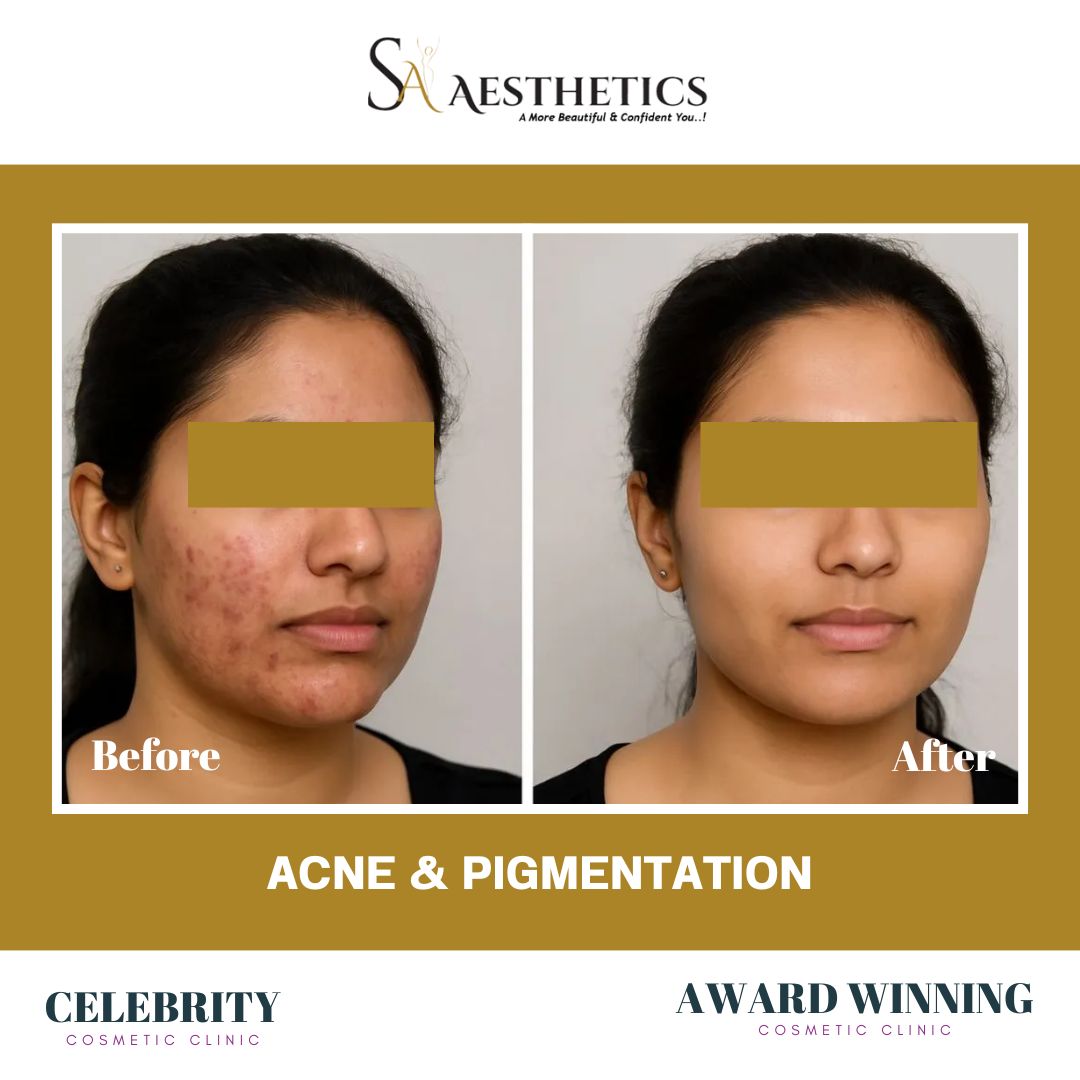
Acne & Pigmentation Results
Acne - How it Works?
Your skin has sebaceous glands that produce oil to keep skin soft. During hormonal changes (teenage years, periods, stress), these glands produce too much oil.
Normally, dead skin cells shed naturally.
Sometimes they stick together with excess oil and block the hair follicle (pore).
A bacteria called Cutibacterium acnes (C. acnes) lives on skin.
When a pore is clogged, this bacteria multiplies, causing infection.
Your immune system reacts, leading to redness, swelling, pain, and pus formation.
Whiteheads – clogged pore closed at the surface
Blackheads – clogged pore open (turns black due to oxidation, not dirt)
Pimples (papules/pustules) – red, inflamed bumps
Nodules/Cysts – deep, painful acne that can cause scars
Pigmentation - How it Works?
These creams:
Slow melanin production
Lighten existing dark spots
Speed up skin renewal
Common ingredients:
Vitamin C – brightens skin
Niacinamide – reduces pigment transfer
Kojic acid / Arbutin – lightens spots
Retinoids – increase cell turnover
Hydroquinone (medical use) – strong pigment reducer
Peels use mild acids to:
Remove the top pigmented skin layer
Stimulate new, clearer skin growth
Types:
Glycolic peel
Salicylic peel
Lactic peel
TCA (medical only)
Results improve over multiple sessions.
Lasers:
Break down melanin into tiny particles
Body naturally clears the pigment
Best for:
Sun spots
Melasma (carefully)
Acne pigmentation
Requires expert handling to avoid rebound pigmentation.
Used in stubborn cases:
Tranexamic acid
Glutathione
Vitamin E & C
These work from inside to control pigment formation.
Mild pigmentation: 4–6 weeks
Moderate: 2–3 months
Melasma: long-term management
Yes, if:
Sun protection is poor
Hormones are not controlled
Treatment is stopped early
Skin Treatments Videos
Frequently asked questions
Acne FAQs
Pigmentation FAQs
How can we help you Today.! Hydra Facial Quality! Results!
- Acne & Pigmentation treatment in Mumbai
- Acne & Pigmentationtreatment in Colaba
- Acne & Pigmentation treatment in Kurla
- Acne & Pigmentation treatment in Kalina
- Acne & Pigmentation treatment in Dadar
- Acne & Pigmentation treatment in Chembur
- Acne & Pigmentation treatment in Ghatkopar
- Acne & Pigmentation treatment in Malad
- Acne & Pigmentation treatment in Juhu
- Acne & Pigmentation treatment in Fort
- Acne & Pigmentation in Navy Nagar
- Acne & Pigmentation in Marine Drive
- Acne & Pigmentation in Sion
- Acne & Pigmentation in Wadala
- Acne & Pigmentation in New Cuffe Parade
- Acne & Pigmentation in South Mumbai
- Acne & Pigmentation in Bhandup
- Acne & Pigmentation in Bandra East
- Acne & Pigmentation in Bandra West
- Acne & Pigmentation in Bandra
- Acne & Pigmentation near me
- Acne & Pigmentation in Kandivali East
- Acne & Pigmentation in Kandivali West
- Acne & Pigmentation in Mumbai central
- Acne & Pigmentation in Mulund
- Acne & Pigmentation in Dahisar East
- Acne & Pigmentation in Dahisar West
- Acne & Pigmentation in Dahisar
- Acne & Pigmentation in Cuffe parade
- Acne & Pigmentation in Santacruz